For inlet fishing, combine a dated tide prediction with the actual position, access, weather and applicable rules. There is no single high-tide hour that guarantees a catch or safe footing.
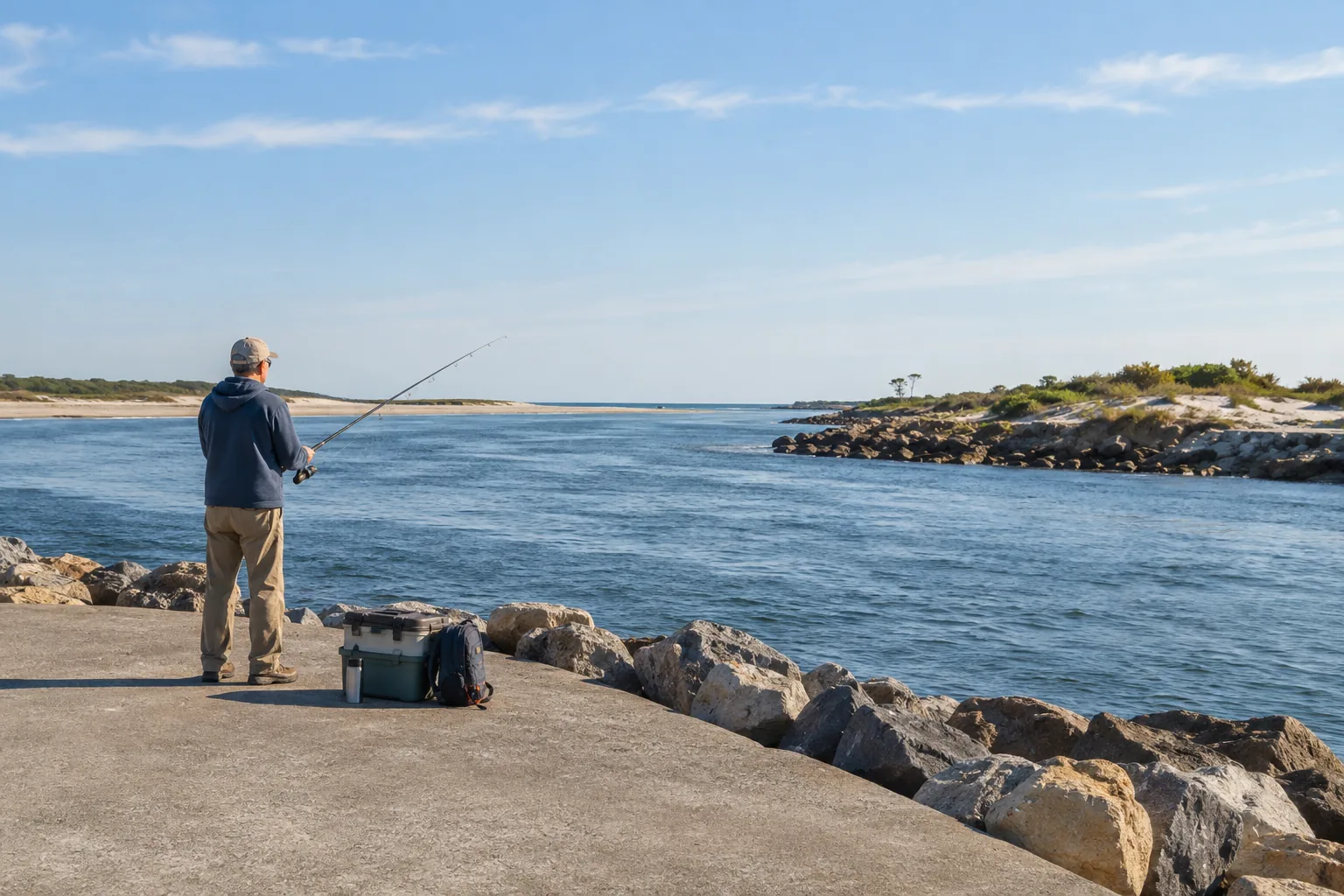
Write down the position, not just “the inlet”
A pier, bulkhead, beach edge and rocky position have different access and footing. Decide where you can fish legally and safely before choosing a tide window. Do not use a favourable table entry as permission to enter a restricted area or climb onto wave-washed rocks.
Use the tide event correctly
Read the Ocean City Inlet predictions for the date, local time and water-level trend. High and low tide do not automatically identify slack current at a fishing position. If current speed is important, use appropriate current information and local conditions rather than substituting a high-water time.
Check rules before rigging
Use Maryland DNR licensing information and current fishing regulations. Requirements depend on location, method and species. Do not carry a Chesapeake rule into the Atlantic coastal bays without checking the applicable area.
Build a session worksheet
| Record | Why |
|---|---|
| Location and legal access | The tide chart does not grant permission to fish there. |
| Tide event, time and station | Makes the session comparable without mixing locations. |
| Wind, waves and footing | Determines whether the intended position remains usable. |
| Target species and current rules | Avoids relying on a generic season or size limit. |
| Exit route and stop condition | Leaves a plan if waves or access change. |
Compare sessions without claiming a universal best tide
If you keep a log, record conditions and results consistently. A successful outing at a rising tide does not prove that every rising tide at the inlet will perform the same way. Weather, species, presentation and location can change the result.
Related guides
See surf-fishing planning for beach positions, station and current distinctions for the waterway, and official weather information before departure.
Continue planning
Before choosing your fishing position, compare the fishing piers and public-access guide. It separates bayside public areas from the paid inlet pier and identifies the licensing questions to check before a visit.