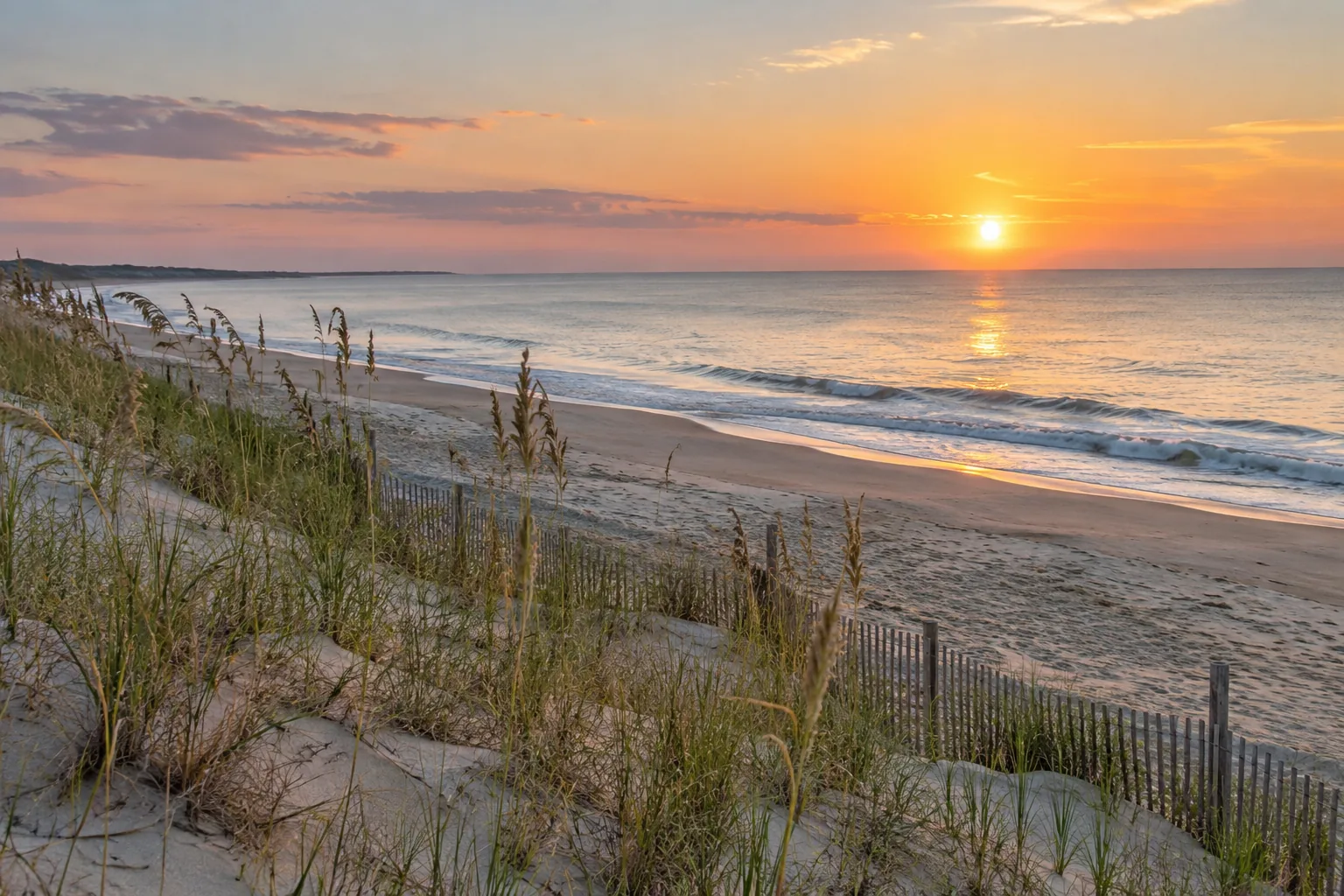
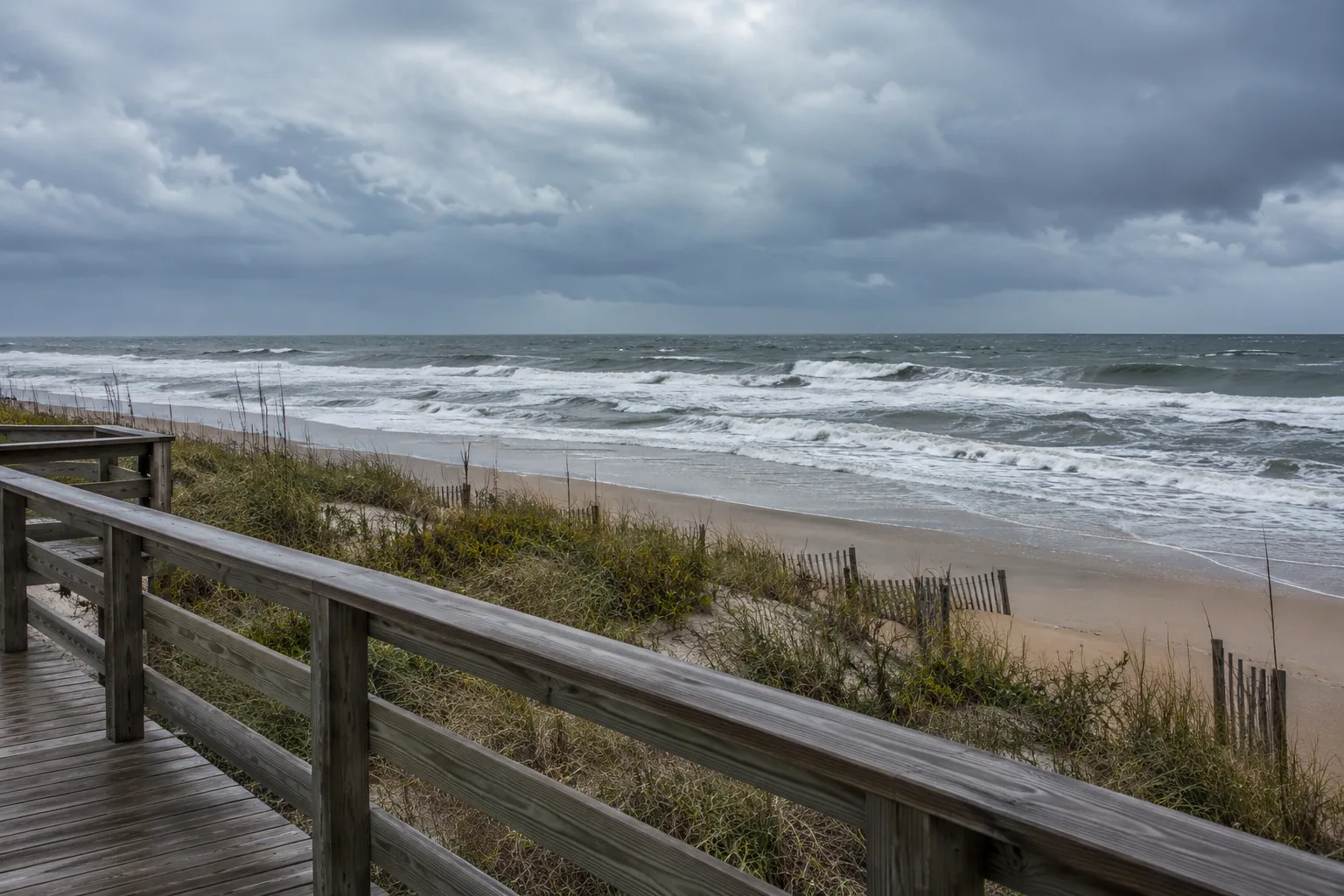
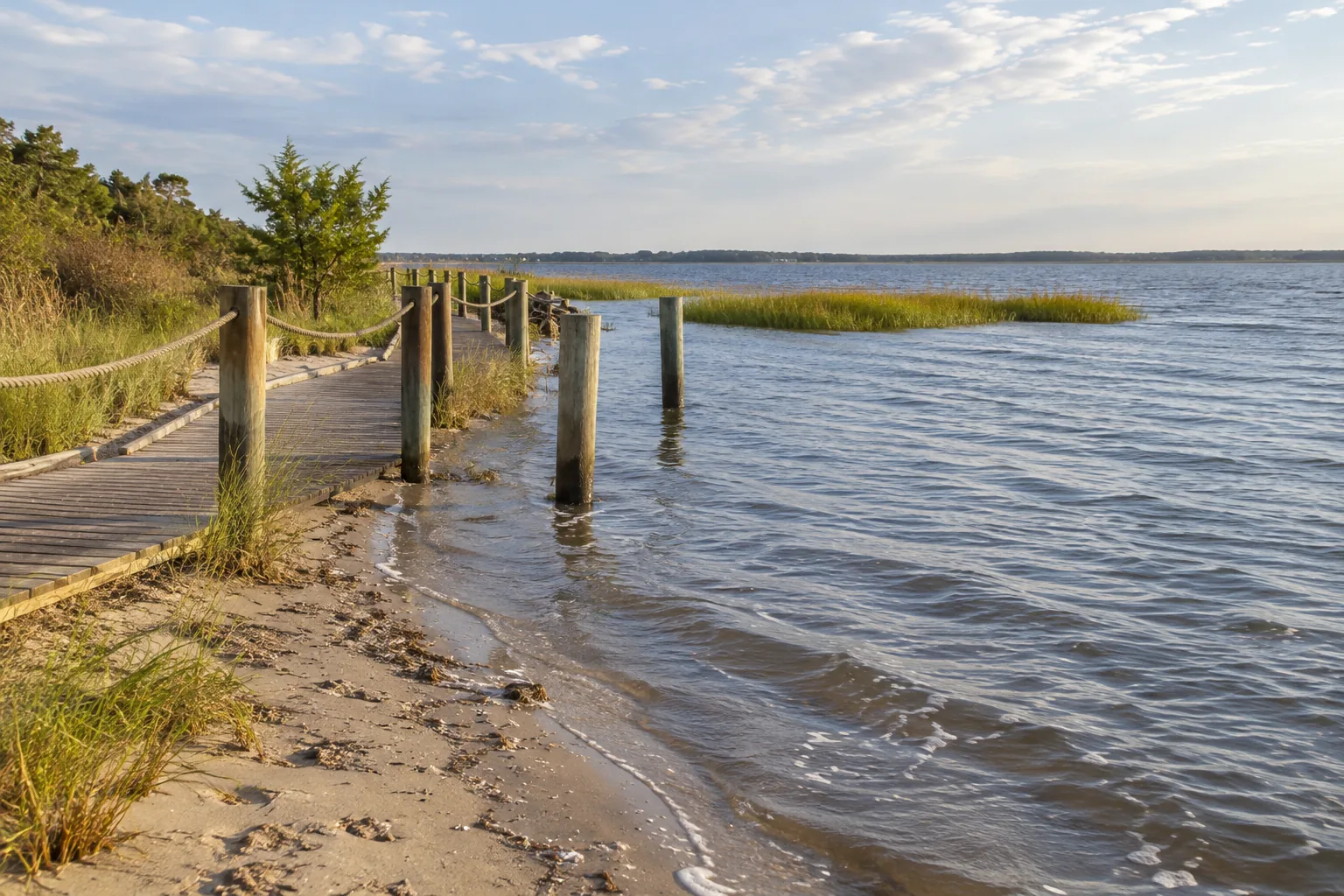
Summer and winter change how you plan a coastal visit, but the season alone does not tell you the tide time or height for a particular day. Compare dated predictions and current weather separately.
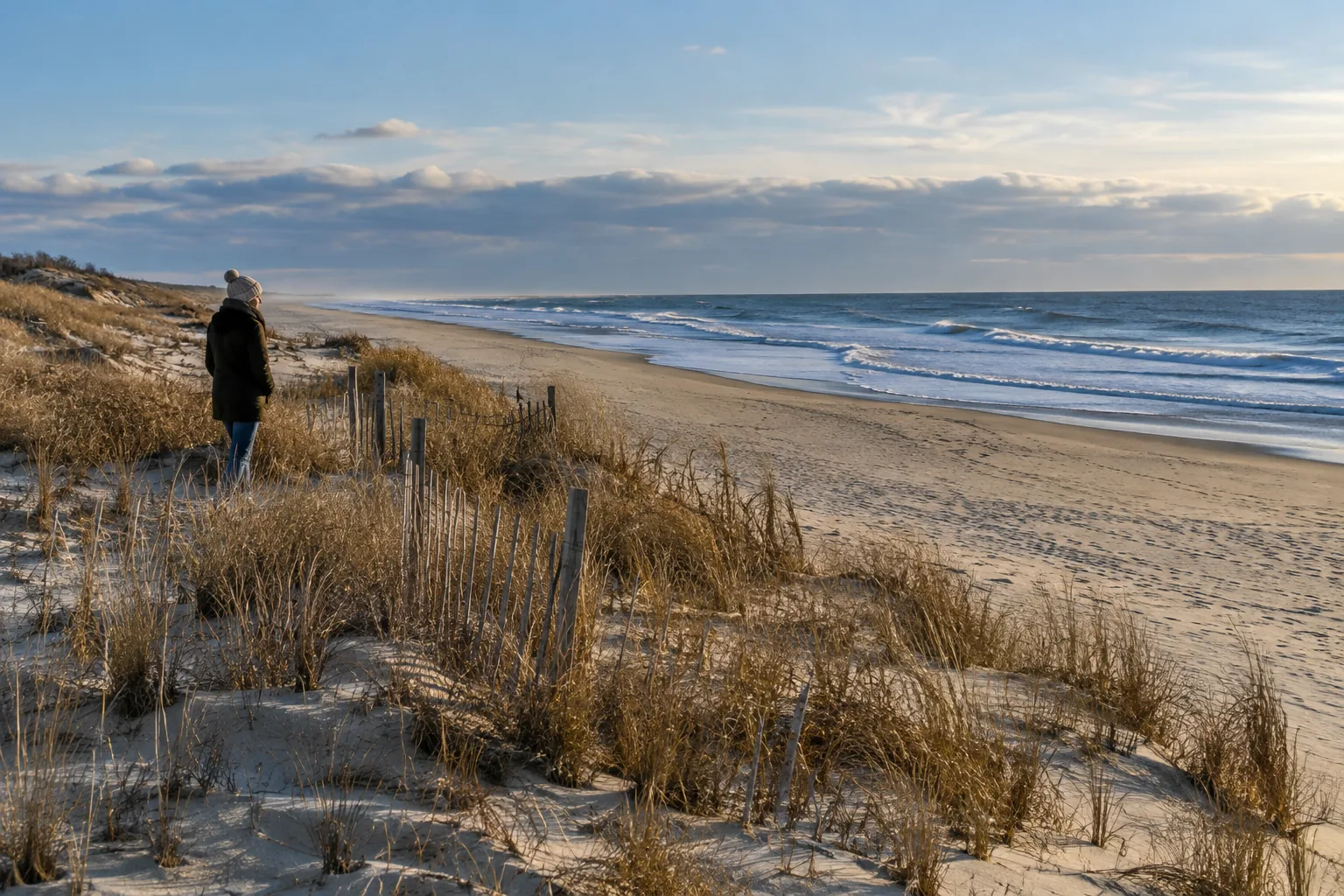
The astronomical cycle continues through both seasons
The Ocean City Inlet table lists high and low events throughout the year. Successive times and heights vary with the tidal cycle. “Winter tide” and “summer tide” are not fixed daily hours, and one month’s typical value is not a prediction for every day in that month.
Use the 2026 month selector to compare actual dated predictions. Keep station, unit and datum the same when comparing entries.
Seasonal planning differences
| Check | Warm-season visit | Cool-season visit |
|---|---|---|
| Beach services | Check the actual staffed area and operating dates. | Do not assume summer lifeguard coverage continues. |
| Daylight and clothing | Plan sun exposure and the return time. | Allow for shorter daylight and wind chill. |
| Water temperature | Check a recent observation, not only a monthly mean. | Cold water needs a separate assessment from tide height. |
| Weather and access | Check forecasts and local restrictions. | Check storm alerts and any seasonal access changes. |
Weather can matter more than the season label
Wind, atmospheric pressure, waves and storms can change actual water levels and the usable shoreline. A calm summer photograph cannot stand in for winter conditions; a winter storm description cannot predict every cool-season day. Use the official forecast for your visit date.
Do not infer swimming conditions from tide height
A similar predicted height in July and January does not mean similar water temperature, supervision or surf. Check the monthly water-temperature reference and a recent observation separately, then follow Beach Patrol and rip-current guidance.
A fair month-to-month comparison
- Select the same station and MLLW height reference.
- Record exact dates rather than one value for an entire season.
- Keep predicted and observed levels in separate columns.
- Record the applicable EST or EDT local-time label.
- Add weather, daylight and access checks for the activity.
Plan a dry-land alternative
Choose a shorter public walking route or an inland activity if wind, surf or access does not suit the original plan. For a shoreline walk see the walking checklist; for storm-time decisions see nor’easter and surge guidance.