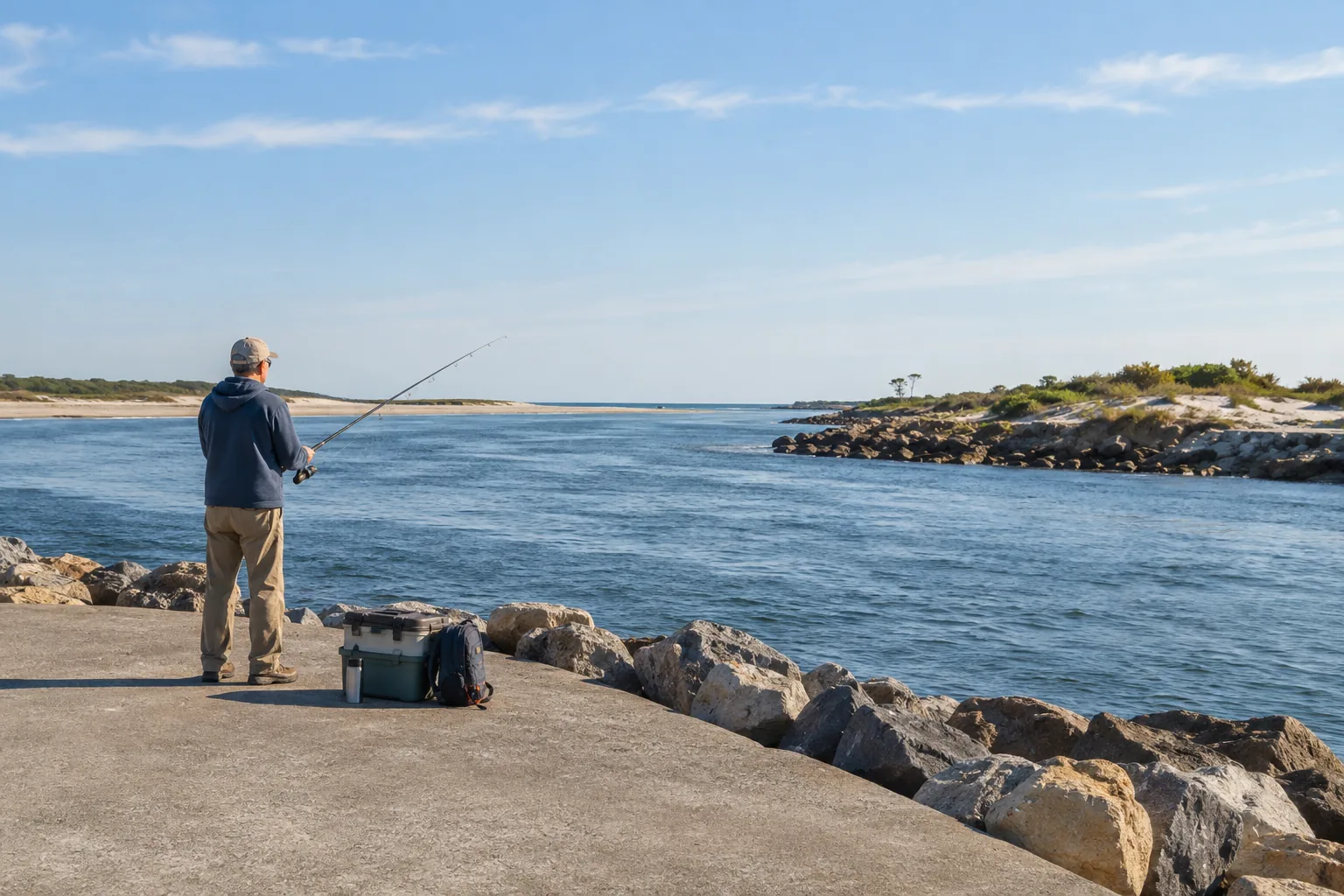
High and low tide change the shoreline available to an angler, but neither is a universal best fishing time. Match the tide to your legal fishing area and the actual surf conditions.
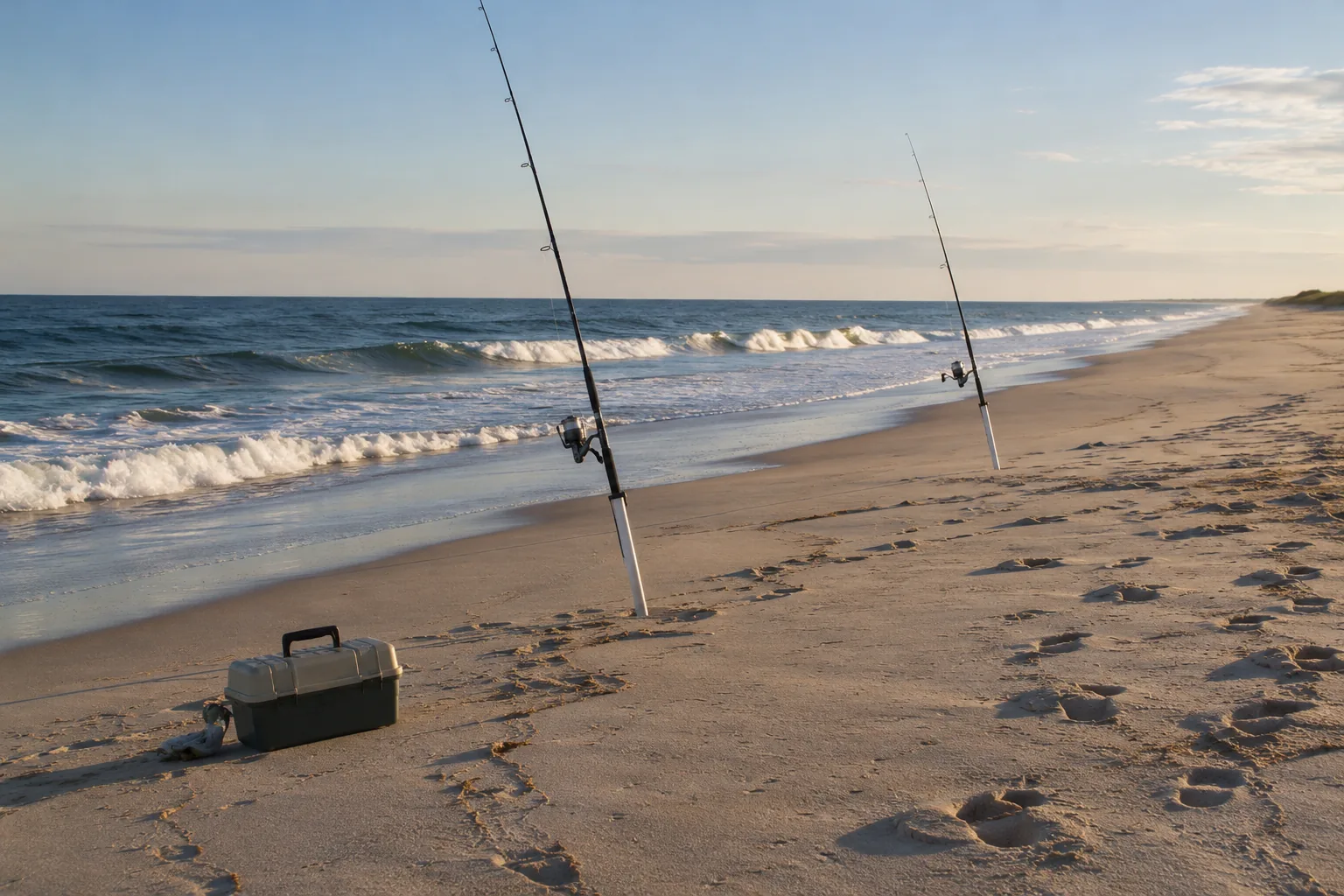
Start with access and beach use
Check Ocean City Beach Patrol information and the current local rules for fishing where you intend to go. Swimming areas, seasonal operations and posted restrictions can affect access. An empty-looking beach or a low tide is not permission to fish anywhere.
Compare the practical differences
| Situation | Planning question |
|---|---|
| Higher water | Is there enough dry space for equipment and an unobstructed retreat? |
| Lower water | Does the wider visible beach still have a safe, legal route? |
| Rising water | Can waves reach your gear or cut off the return? |
| Falling water | Are you being drawn farther onto exposed terrain without a clear exit? |
What the prediction does not tell you
The inlet tide table predicts water level at its station. It does not forecast surf height, locate feeding fish or measure a rip current at your beach. Read the local date and event, then check weather and coastal conditions separately.
Keep a useful fishing record
Record the beach position, date, tide stage, wind, waves, species and method. That gives you a basis for comparing future sessions. Do not reduce a complex result to “high tide always works” or “low tide is safe”. This website does not claim controlled fishing tests.
Pre-session checklist
- Legal beach position and current local restrictions.
- Applicable Maryland DNR rules and licensing requirements.
- Tide station, local time and direction of water-level change.
- Dry equipment position and a route back to public access.
- Enough room between your fishing activity and other beach users.
If the plan changes
Stop when access or footing becomes unsuitable; a planned tide window is not a reason to stay. See beach safety guidance and inlet fishing planning for the different checks at another position.
Continue planning
If you prefer a pier to a surf-fishing position, compare the fishing piers and public-access guide. It separates bayside public areas from the paid inlet pier and identifies the licensing questions to check before a visit.