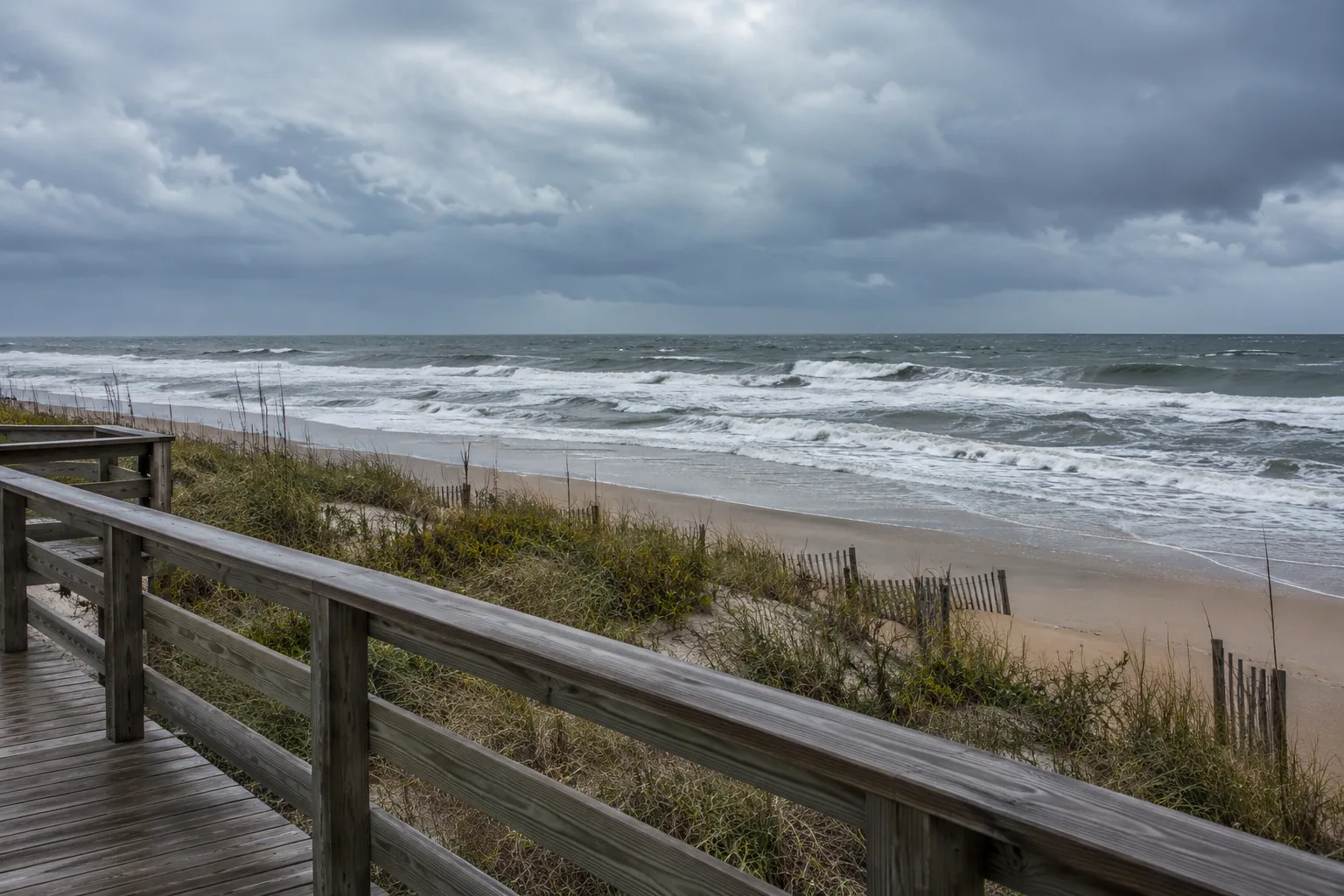
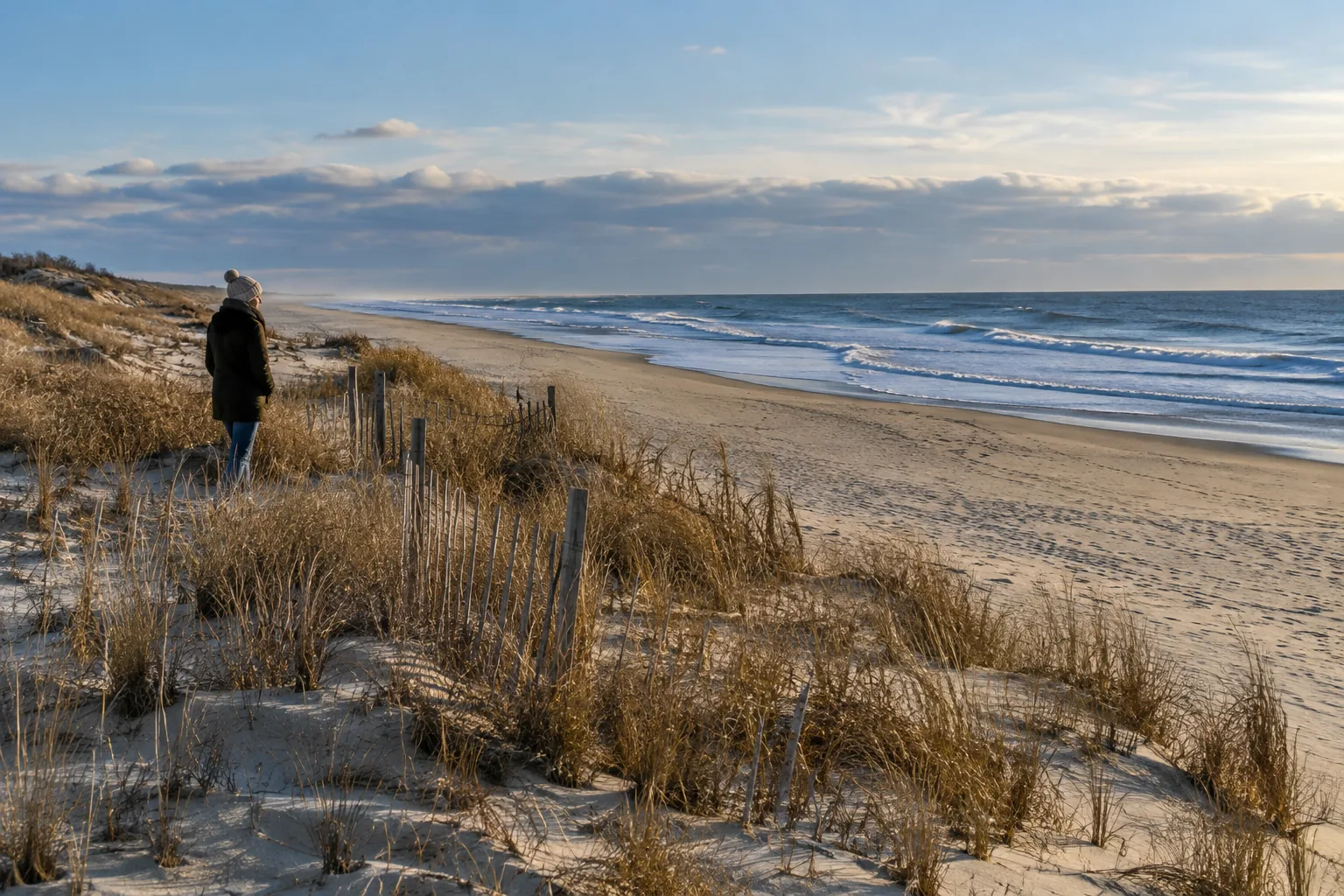
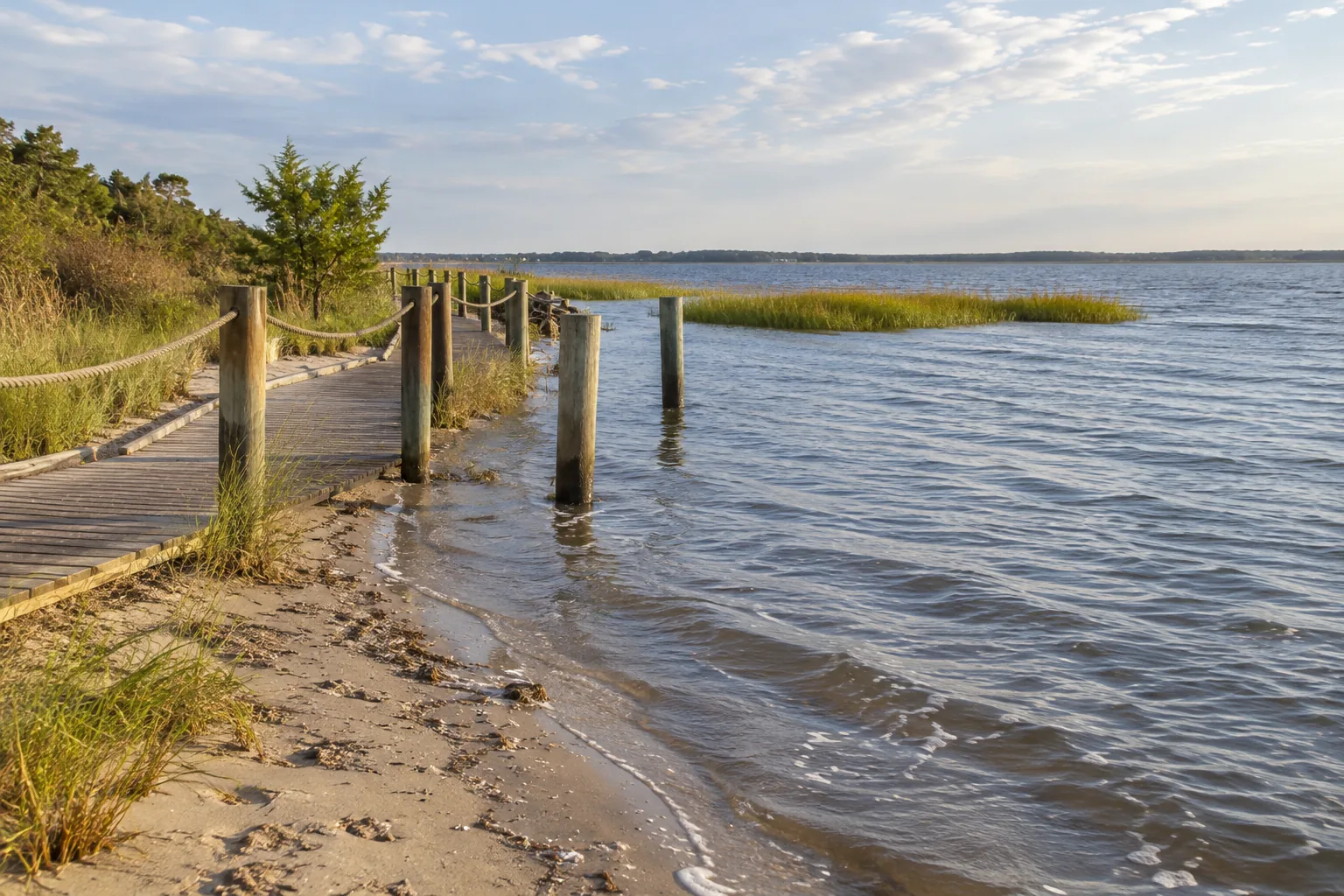
For a coastal photograph, light and water level are separate planning variables. Choose your camera position first, then check the date’s tide, weather and daylight without assuming sunrise is always low tide.
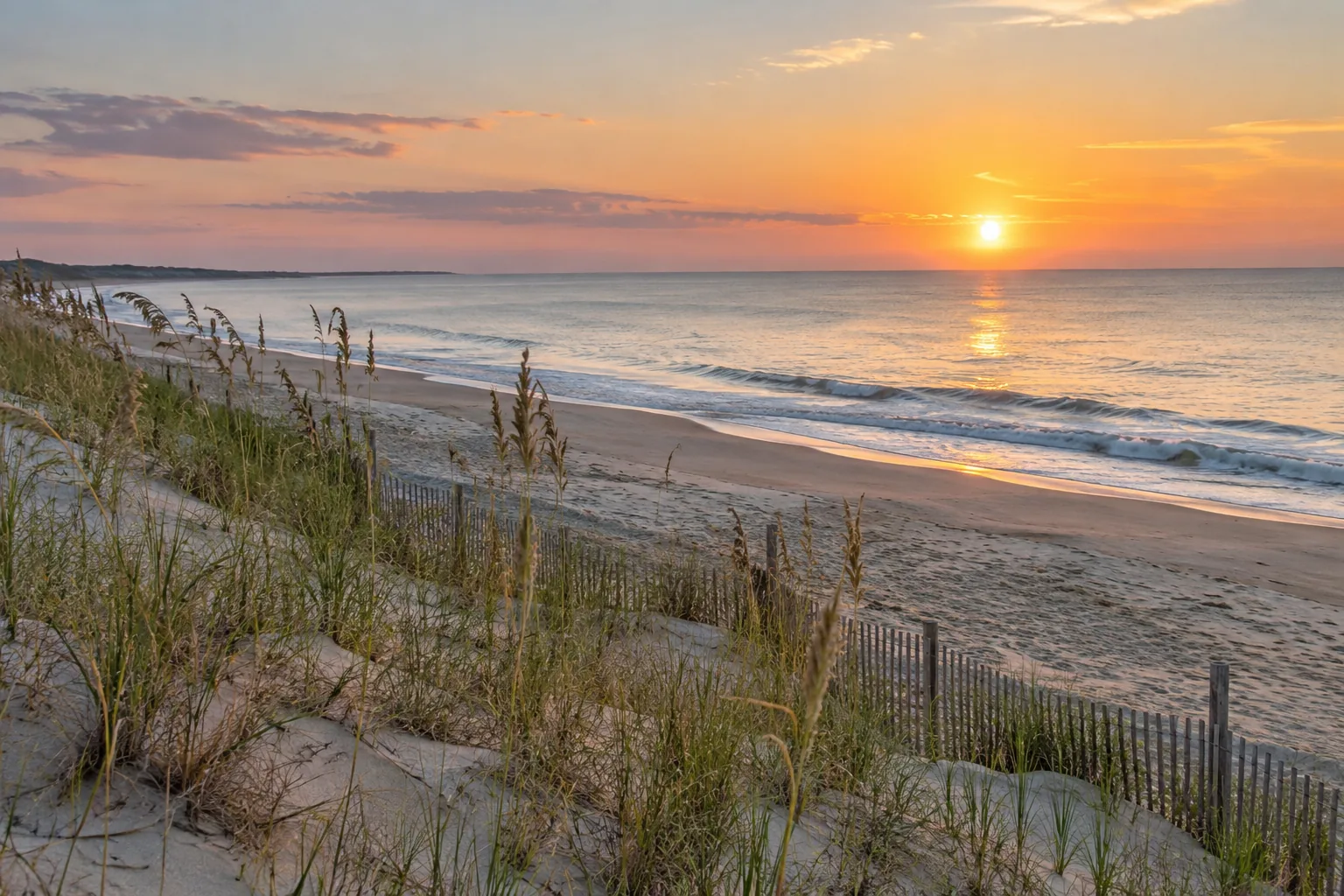
Build the shot around access
Choose a public position on dry ground with room for a tripod and a clear exit. A narrow sand strip, slippery rocks or a wave-washed edge is not worth relying on for a photograph. Use established dune crossings and avoid blocking a public path with equipment.
Match the tide to the intended scene
The inlet tide predictions can help anticipate changing water level. Higher water and lower water can produce different compositions, but the table does not guarantee reflections, wave size or exposed sand at your exact location. Look at the real scene before setting up.
Check the local date of the event, especially if a dawn outing follows a high tide before midnight. Use an appropriate station for a bay-side viewpoint rather than applying a fixed inlet offset.
Light is not a tide forecast
Get sunrise or sunset information for the actual date and place, then check clouds and wind through official weather information. Do not publish a permanent article time as today’s sunrise. Allow time to set up and return, with a public lit route if darkness is part of the plan.
A photography worksheet
| Record | Purpose |
|---|---|
| Date and viewpoint | Keeps daylight and station selection tied to the outing. |
| Tide event and trend | Anticipates changing water level around setup. |
| Weather and wind | Checks whether the original composition remains practical. |
| Dry position and exit | Avoids equipment or people being trapped by rising water. |
| Wildlife and access rules | Prevents a photo plan from overriding local restrictions. |
Photograph wildlife from a distance
At Assateague, use a zoom lens and follow the park’s horse-viewing guidance. Do not approach or feed wildlife to arrange a scene.
When to change the plan
If surf reaches the intended position or access is uncertain, choose another view from dry public ground. See coastal flooding checks and walking route planning before making the return dependent on a tide estimate.